
There are hunts you go on…and then there are hunts that stay with you.
Aoudad hunting in West Texas lives firmly in that second category. Out where mesas rise from the desert floor and canyons swallow sound, it’s a hunt that isn’t easy and isn’t predictable. And that’s exactly why hunters keep coming back.
For Tanner Crim, owner of a Texas hunting operation partnered with Venku, that’s the point.
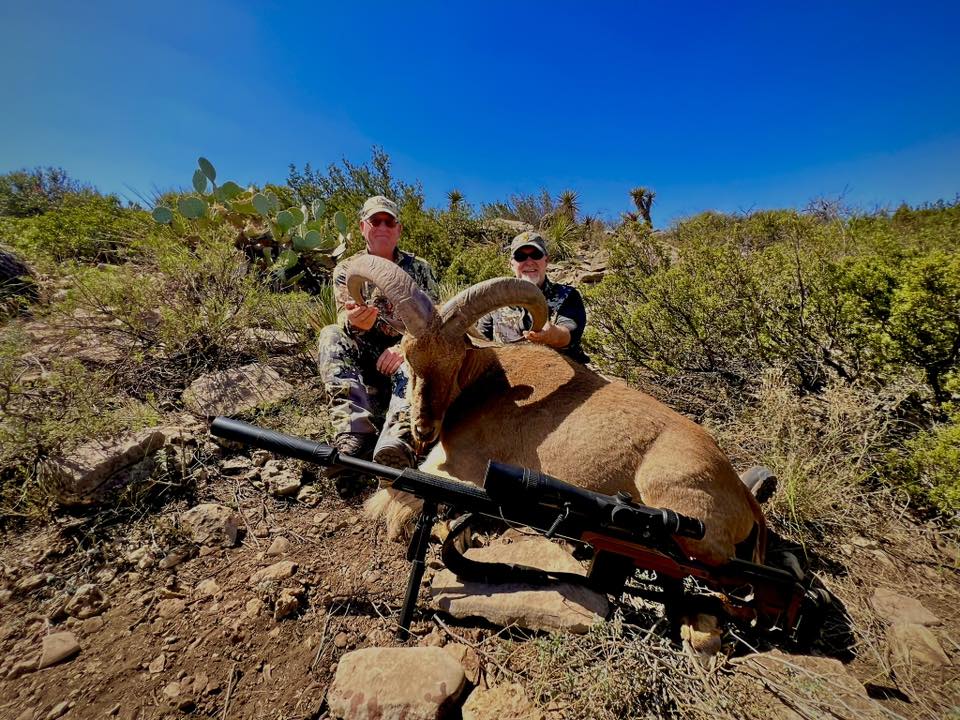
Built on People, Not Just Tags
Spend five minutes talking with Tanner and one thing becomes clear: this isn’t a volume operation.
“We’re not trying to kill hundreds of animals a year,” he says. “We want to keep hunting pressure low and manage each herd the right way.”
That mindset shows up in everything they do. From the 100,000+ acres they have access to in Texas (plus another 20,000 in New Mexico), to the landowner relationships they’ve built, it’s all centered around long-term thinking: healthy herds, strong habitat, and hunts that actually mean something.
But more than anything, it’s about people.
“We’re hunting and bonding with each person that comes to camp,” Tanner says. “If we leave with a friendship, that’s a win. If we harvest an animal, that’s the icing on the cake.”
Why Aoudad?
If you’ve never chased Aoudad – also known as Barbary sheep – there’s a reason they’ve quietly become one of the most sought-after hunts in the country.
They’re often called the “poor man’s sheep hunt.” That label undersells them. This is a sheep hunt in every sense that matters: big country, long glassing sessions, steep terrain, long shots, and a grind that wears on you mentally as much as physically.
“What draws people in is the challenge,” Tanner explains. “Where these sheep live is unlike anything else in Texas.”
He’s right. West Texas Aoudad country feels more like the West than most hunters expect from the Lone Star State. Wide-open views, unforgiving terrain, and animals that live where they’re hard to reach – and even harder to kill.
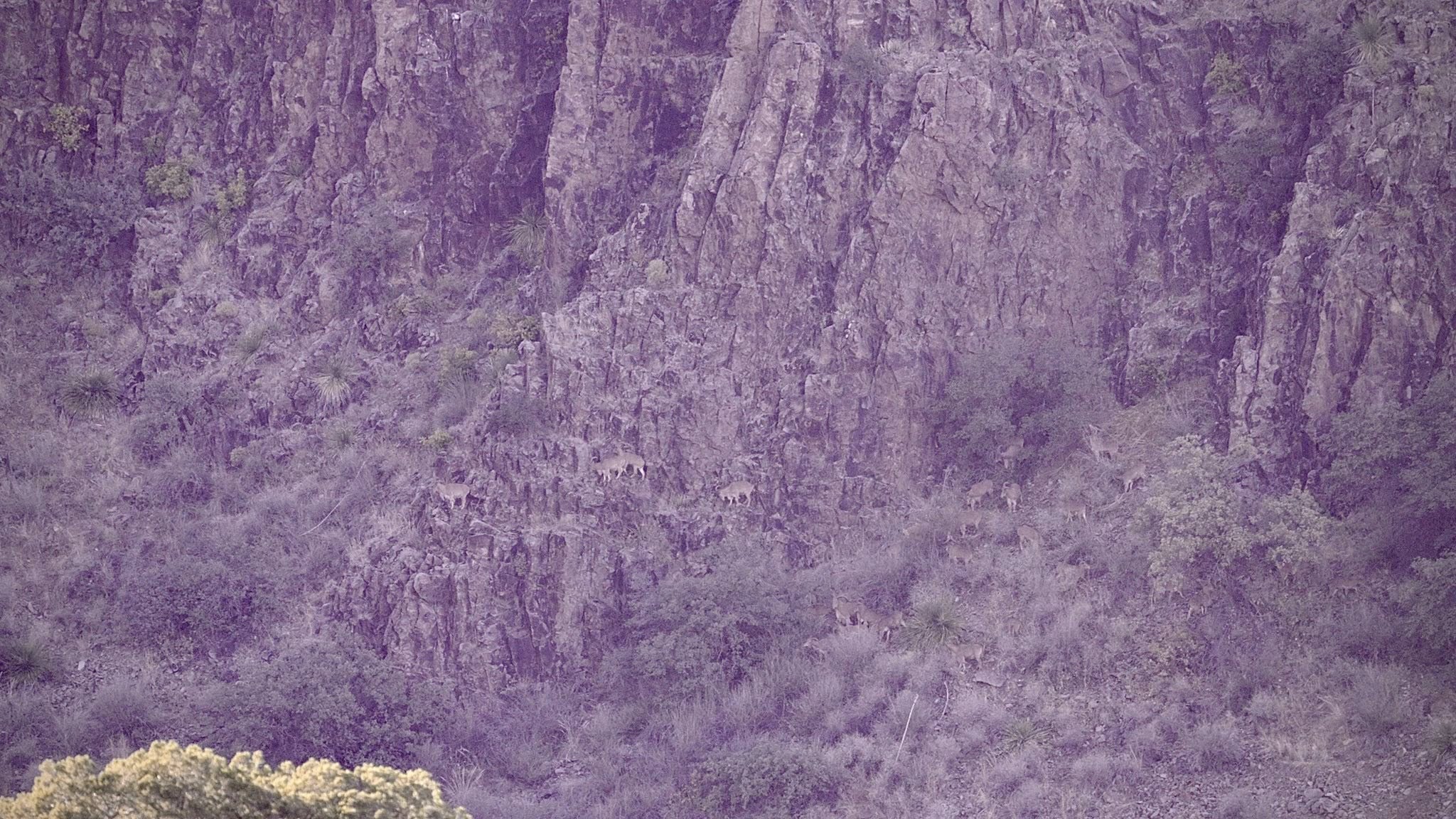
What to Expect on the Mountain
Aoudad hunting isn’t a truck hunt. It’s a test.
Terrain ranges from high desert flats to steep, rocky mountains. And just like the rest of Texas, everything out there has thorns.
If you’re coming to camp, Tanner keeps the expectations simple. Be able to hike 2–3 miles. Handle elevation changes. Move comfortably with a pack. His guides will handle the heavy lifting if needed, but preparation matters.
“Being physically ready just makes the whole experience better,” he says.
And then there’s the shooting. Hunters should be comfortable out to 400 yards. Not hopeful. Not guessing. Comfortable. Because when the moment comes, it’s rarely close – and rarely forgiving.
A Hunt That Rewards Preparation
If there’s one thing Tanner sees too often, it’s hunters showing up underprepared with their rifle.
“The most common mistake? Not being familiar with their gun,” he says. “Shooting is a sport. It takes practice.”
Every hunt starts at the range – no exceptions. Even if you’ve checked zero on the way in. It’s about more than confirming your rifle. It’s about seeing how you handle it. Safety. Confidence. Comfort. A prepared hunter stands out immediately.
“They’ll want to talk about their rifle. You can tell right away.”
Before you ever step into the field, Tanner recommends:
- Confirming zero (and confirming it again in camp)
- Building a ballistic data card, or “dope chart,” and knowing it cold
- Practicing from real hunting positions – tripods, prone, off your pack
- Checking torque on your rifle and mounts
- Traveling with your firearm properly secured and cleared
Because at the end of the day, it comes down to one thing:
“We owe it to the animal to be as prepared as possible. Clean, ethical harvest – that’s the goal.”
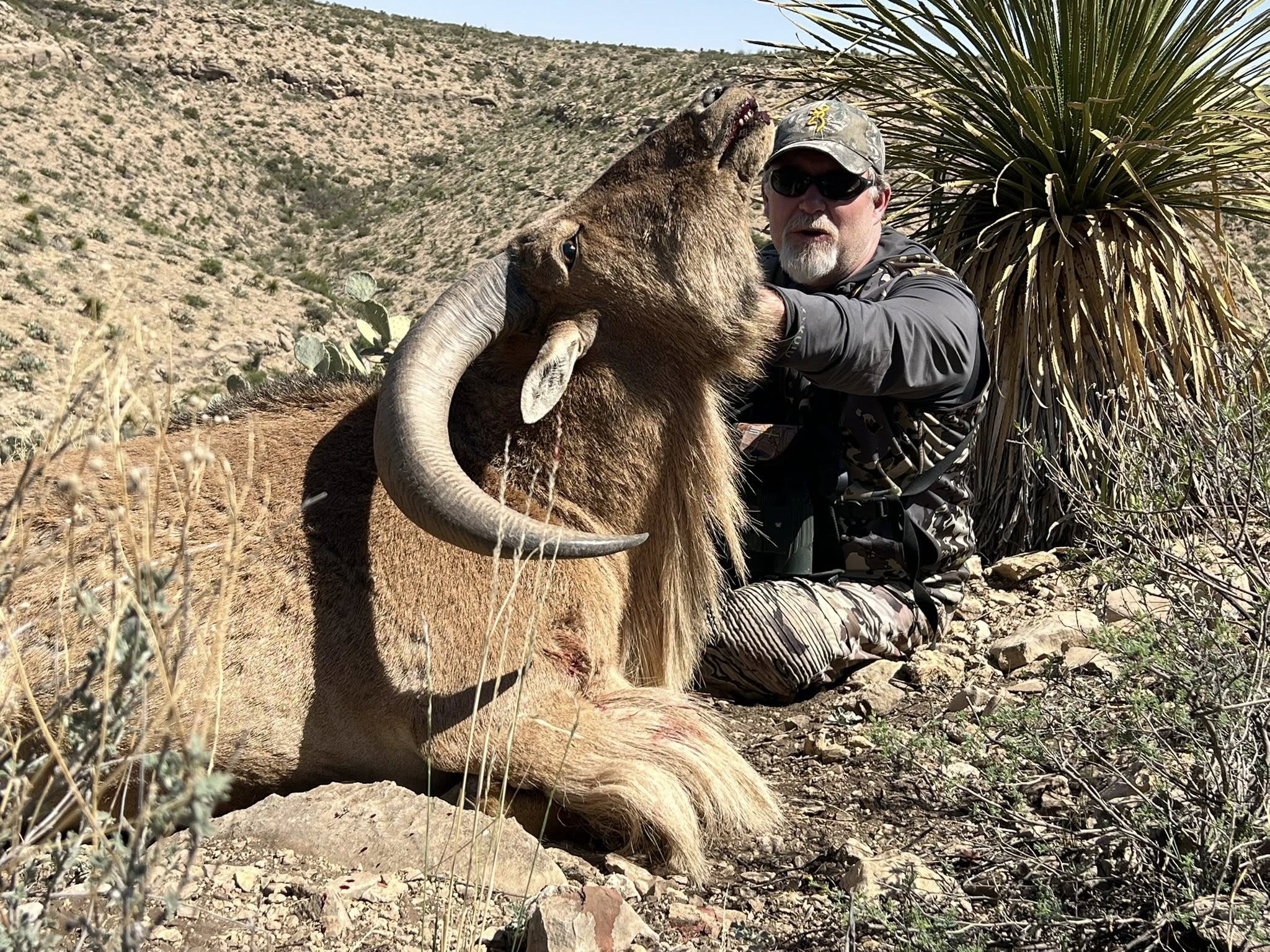
When to Hunt Aoudad
Aoudad season in West Texas stretches across multiple months, and each window offers something different.
September – October (Rut): Big groups. Rams on the move. Hot weather and demanding conditions.
November – December: Cooler temperatures. More comfortable hunting. Still plenty of action.
January – March: Colder hunts. More glassing. Rams can be tucked into hard-to-reach pockets.
April – May: Wind, rain, and unpredictability. Can be incredibly rewarding – or incredibly tough.
Tanner’s personal picks? September, November, and October.
The Experience Matters
These hunts aren’t one-size-fits-all. You can stay in a lodge or a canvas wall tent. Hunts are typically 1×1 or 2×1 (one or two hunters per guide). And the guides? They live this lifestyle year-round – from West Texas Aoudad to spring turkey to waterfowl seasons up north.
But what keeps people coming back isn’t just the opportunity. It’s the experience.
Tanner grew up in South Texas, started working in the hunting world at 13, and spent over a decade managing and hunting whitetails before stepping away to build a career and raise a family. When he came back to outfitting in 2023, it wasn’t just about hunting. It was about people.
“There’s something special about bringing someone – especially a kid – on a hunt,” he says. “Those are the memories that last.”
And maybe his favorite line says it best:
“A child will never remember their best day of watching television.”
Aoudad hunting in West Texas is hot, steep, and demanding. But for hunters willing to prepare – for the ones who respect the animal, the landscape, and the process – it delivers something rare. Challenge. Perspective. And the kind of experience that sticks with you long after you leave the mountain.
If that’s what you’re after, Tanner Crim and his Texas operation is doing it the right way.
You can find his hunts and book your hunt directly on Venku.