
Backcountry hunting changes the gear equation.
When you’re hunting a few hundred yards from the truck, forgetting something is annoying.
When you’re five, ten, or fifteen miles in, it’s a different story.
Your pack needs to carry everything you need to hunt, sleep, eat, navigate, stay warm and dry, handle an injury, and get back out without weighing you down so badly that the hike becomes miserable.
That’s the balance.
Bring what you need. Leave the unnecessary stuff at the truck. And don’t gamble on the gear that could get you home safely.
This backcountry hunting gear checklist covers the essentials, from your weapon and optics to navigation, communication, clothing, shelter, food, water, emergency gear, and the little things that are easy to forget.
Use it as a starting point, then adjust it for the species, terrain, season, weather, distance, and length of your hunt.
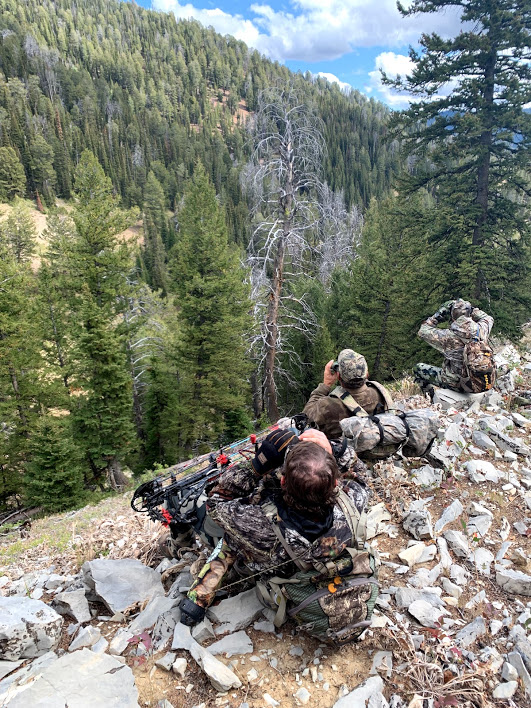
Photo Credit: Mule Deer Hunt – Poker Creek Camp / Cokeville / Wyoming
Backcountry Hunting Gear Checklist
Before getting into the details, here’s the quick version.
Hunting Gear
Rifle or bow
Ammunition or arrows
Binoculars (See list of the “Most reliable Binoculars according to Colorado elk hunting guides“)
Rangefinder
Optics cleaning supplies
Hunting knife
Game calls
Decoy, if needed
Hunting pack
Game bags
Field dressing kit
License and tags
First-aid kit
Personal medications
Navigation & Communication
GPS or GPS-enabled phone
Offline maps
Paper map
Compass
Satellite communicator or emergency communication device, when appropriate
Phone
Portable power bank
Extra batteries
Headlamp
Backup light
Clothing
Base layers
Mid layer
Insulating layer
Waterproof/windproof outer layer
Hunting pants
Extra socks
Gloves
Beanie or warm hat
Sun hat
Broken-in boots
Gaiters, when appropriate
Rain gear
Camp & Sleeping
Tent or shelter
Sleeping bag
Sleeping pad
Camp stove
Fuel
Cookware
Lighter/fire starter
Water filter or purification system
Emergency shelter or bivy
Repair kit
Food & Water
Water bottles/bladder
Water filter
Backup purification method
High-calorie meals
Snacks
Electrolytes
Emergency food
Emergency & Safety
First-aid kit
Emergency blanket
Whistle
Fire starter
Headlamp
Extra batteries
Satellite communication device
Personal medications
Emergency shelter
Duct tape/repair supplies
Personal & Miscellaneous
Toilet paper
Hand sanitizer
Sunscreen
Lip balm
Insect repellent
Small towel
Trash bags
Camera/phone
Charging cables
Notebook and pen
Now let’s break it down.
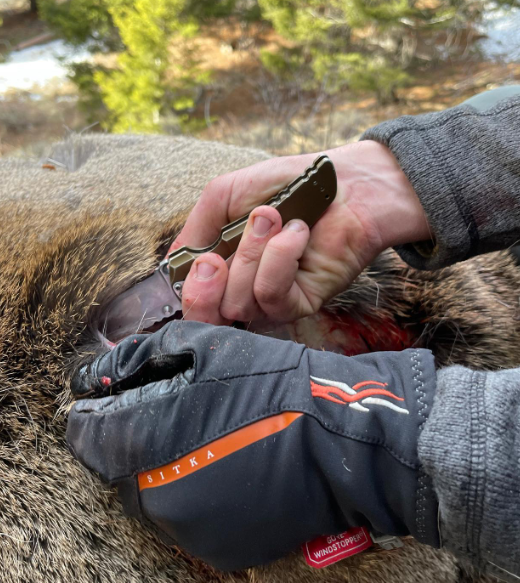
1. Your Weapon and Hunting Gear
Start with the obvious stuff.
Your rifle or bow needs to be ready before you leave the house—not sitting in your truck while you try to figure out a problem at the trailhead.
Rifle Hunters
- Rifle
- Ammunition
- Scope
- Scope covers
- Bipod or shooting support, if appropriate
- Sling
- Rangefinder
- Optics cleaning supplies
Make sure your rifle is clean, sighted in, and functioning properly.
Bring enough ammunition for the hunt and a reasonable amount of backup ammunition.
Bowhunters
- Bow
- Arrows
- Broadheads
- Release
- Bow sling
- Stabilizer
- Peep sight and other necessary accessories
- Small repair supplies
Bring whatever tools and replacement parts are appropriate for your setup.
The backcountry is not the place to discover that the one small piece you need to keep your equipment functioning is sitting on your workbench at home.
2. Optics and Observation Gear
For western big game, quality glass can make a huge difference.
Your basic setup will generally include:
- Binoculars (See list of the “Most reliable Binoculars according to Colorado elk hunting guides“)
- Rangefinder
- Spotting scope, when appropriate
- Tripod
- Lens cleaning cloth
- Lens protection
You don’t necessarily need the biggest or most expensive optics available.
Think about what you’re actually going to carry.
A heavy spotting scope and tripod may be worth every ounce for some hunts. On others, binoculars and a rangefinder may be enough.
Every piece of gear in your pack has a cost in weight.
3. Your Hunting Pack
Your pack is your mobile base camp.
It needs to carry your essentials without turning every mile into a punishment.
Look for a pack that fits properly and is appropriate for the length and type of hunt.
For an overnight or multi-day backcountry hunt, you’ll need enough capacity for:
- Food
- Water
- Clothing
- Shelter
- Sleeping system
- Navigation equipment
- Emergency gear
- Hunting equipment
- Field dressing supplies
And if you’re hunting big game, think about what happens after you kill an animal.
Your pack needs to be capable of carrying meat – not just getting you to the hunting area.
4. Navigation Gear
This is one area where you don’t want a single point of failure.
Your navigation setup should include some combination of:
- GPS
- GPS-enabled phone
- Offline maps
- Paper topo map
- Compass
- Extra batteries
- Portable power bank
Before leaving home, download the maps for your hunting area.
Then test them.
Put your phone in airplane mode and make sure you can still access the maps and determine your location.
Don’t discover that your map requires cell service when you’re ten miles from the truck.
For more on this, see:
How Hunters Should Use GPS, Maps and a Compass
5. Communication Gear
A cell phone is useful.
It shouldn’t necessarily be your entire communication plan.
If you’re going into an area with unreliable or nonexistent cell service, consider carrying a satellite communicator, satellite phone, or another communication device appropriate for the area.
The exact equipment you need depends on the hunt.
But the basic principle is the same:
Know how you’re going to communicate before you lose the ability to communicate.
And make sure you know how to use the device before the hunt.
Don’t learn how to send an emergency message when you’re already having an emergency.
6. Clothing: Pack for the Weather You Might Get
Backcountry weather doesn’t care what the forecast said when you left the truck.
Temperatures can change quickly. Rain can roll in. Wind can pick up. Snow can show up when you weren’t expecting it.
Your clothing system should give you options.
Base Layer
Your base layer moves moisture away from your skin.
Avoid relying on cotton for your primary base layer in cold or wet conditions.
Mid Layer
A fleece or other insulating layer gives you additional warmth without taking up too much room.
Insulation
For cold-weather hunts, bring an insulating layer appropriate for the expected conditions.
Outer Layer
A waterproof and wind-resistant shell can become extremely important when conditions turn.
Don’t Forget the Small Stuff
Bring:
- Extra socks
- Gloves
- Warm hat
- Sun hat
- Neck gaiter
- Rain gear
- Underwear
- Appropriate hunting pants
And make sure your boots are broken in.
A blister ten miles from the truck isn’t a minor problem anymore.
7. Boots and Foot Care
Your feet are your transportation.
Take care of them.
Your boots should be appropriate for the terrain and weather and should be thoroughly broken in before the hunt.
Consider carrying:
- Extra socks
- Blister treatment
- Foot tape
- Moleskin or similar supplies
- Gaiters where appropriate
Keep your feet as dry as possible.
Change socks when necessary.
Don’t ignore a developing hot spot because you don’t want to stop.
Five minutes of prevention can save you hours of misery later.
8. Shelter and Sleeping Gear
If you’re spending the night, your shelter and sleeping system become some of the most important equipment in your pack.
Depending on the hunt, that may include:
- Tent
- Tarp
- Bivy
- Sleeping bag or quilt
- Sleeping pad
- Ground protection
- Pillow or lightweight alternative
Your sleeping bag should be appropriate for the conditions you’re actually expecting—not just the average nighttime temperature.
And remember that your sleeping pad isn’t just about comfort.
It also provides insulation between you and the ground.
9. Food and Cooking
Backcountry food doesn’t need to be fancy.
It needs to be calorie-dense, easy to prepare, and something you’ll actually eat.
Consider:
- Freeze-dried meals
- Jerky
- Trail mix
- Energy bars
- Nuts
- Peanut butter
- Tortillas
- Dried fruit
- Electrolytes
- Instant coffee
- Emergency food
Don’t forget the equipment needed to prepare it:
- Stove
- Fuel
- Pot
- Spoon
- Cup
- Lighter/fire starter
Pack enough food for your planned trip plus a reasonable emergency buffer.
Being one meal short because the hunt ran long is different from being several days short because you got stuck by weather.
10. Water and Water Treatment
Water gets heavy fast.
That’s why you need a plan.
Know where your reliable water sources are before the hunt and understand how you’ll treat that water before drinking it.
Your setup might include:
- Water bladder
- Water bottles
- Water filter
- Purification tablets
- Backup purification method
Don’t assume a clear mountain stream is automatically safe to drink.
And don’t count on finding water exactly where your map says you will.
Your water plan should be part of your Hunt Plan.
11. First-Aid and Emergency Gear
Your first-aid kit should match the hunt.
A basic kit might include supplies for:
- Cuts
- Blisters
- Sprains
- Burns
- Minor wounds
- Pain relief
- Personal medications
For remote hunts, you may need a more comprehensive setup.
Also consider carrying:
- Emergency blanket
- Emergency shelter
- Whistle
- Fire starter
- Duct tape
- Paracord
- Small repair kit
You don’t need to carry an entire hospital.
You do need enough to handle the problems you’re reasonably likely to encounter until you can get help.
12. Field Dressing and Meat Care
If you’re hunting big game, don’t forget what happens after the shot.
Your field dressing kit should be ready before the hunt begins.
Consider:
- Sharp hunting knife
- Backup blade
- Game bags
- Disposable gloves
- Paracord
- Flagging material, where appropriate
- Pack capable of hauling meat
Think through the entire process ahead of time.
Where will you field dress the animal?
How will you keep meat clean?
How will you get the meat from the animal to camp or the truck?
How many trips might it take?
How long will it take?
The pack-out is part of the hunt.
13. Fire and Light
You need a reliable light source.
A headlamp is generally more useful than a handheld flashlight because it keeps both hands free.
Bring:
- Headlamp
- Spare batteries
- Backup light
- Lighter
- Waterproof matches
- Fire starter
And don’t assume you’ll be back at the truck before dark.
If there’s any chance you’ll still be in the field after sunset, plan accordingly.
14. Personal Items
This is where the checklist gets boring.
Which is exactly why people forget this stuff.
Pack:
- Toilet paper
- Hand sanitizer
- Toothbrush
- Toothpaste
- Sunscreen
- Lip balm
- Insect repellent
- Small towel
- Personal medications
- Prescription medications
- Extra charging cable
- Camera/phone
- Trash bags
None of this is exciting.
But you’ll notice when it’s missing.
15. Repair Kit
Backcountry gear doesn’t always fail dramatically.
Sometimes it’s a zipper.
A broken strap.
A torn rain jacket.
A loose boot.
A snapped buckle.
A damaged trekking pole.
A few simple repair supplies can keep a small problem from becoming a big one.
Consider carrying:
- Duct tape
- Gear repair tape
- Paracord
- Zip ties
- Small multi-tool
- Needle and thread
- Spare buckles or straps where appropriate
You don’t need a full workshop.
You need enough to improvise.
16. The Gear You Need for Your Hunt Plan
Your gear list and your Hunt Plan should work together.
Before leaving, make sure someone back home knows:
- Where you’re going
- Where you’re parking
- Where you’re camping
- Your expected route
- Your expected return time
- How you’re communicating
- Who you’re hunting with
- What to do if you don’t check in
Your navigation equipment should match the information in your plan.
If your Hunt Plan says you’re entering from one trailhead and camping on the other side of the drainage, make sure you actually know how to navigate between those points.
For a deeper look at building your plan, read:
How to Make a Hunting Plan: The Complete Guide for Every Hunt
Backcountry Gear: What You Probably Don’t Need
Packing too much is almost as common as forgetting something important.
Before adding another piece of equipment to your pack, ask:
What problem does this solve?
If the answer isn’t clear, leave it behind.
Every pound matters when you’re climbing thousands of feet and carrying meat back out.
The goal isn’t to have every gadget.
It’s to have the right equipment for the hunt you’re actually doing.
Before You Leave the Truck
Don’t wait until you’re five miles in to discover a problem.
Run through your gear before leaving.
Weapon
- Is your rifle zeroed?
- Is your bow tuned?
- Do you have enough ammunition/arrows?
- Do you have the equipment you need for a field repair?
Navigation
- Are your maps downloaded?
- Does your GPS work?
- Do you have a compass?
- Do you have a paper map?
- Are your important waypoints marked?
Communication
- Does your phone have a full charge?
- Is your satellite communicator charged?
- Do you have backup power?
- Does someone back home have your Hunt Plan?
Clothing
- Are your boots broken in?
- Do you have rain gear?
- Do you have enough insulation?
- Do you have extra socks?
Camp
- Is your shelter complete?
- Is your sleeping bag appropriate?
- Do you have your stove and fuel?
- Do you have a way to treat water?
Emergency
- Do you have a first-aid kit?
- Do you have emergency shelter?
- Do you have fire-starting supplies?
- Do you have a way to communicate if you lose cell service?
Food & Water
- Do you have enough food?
- Do you have enough water capacity?
- Do you have a way to treat additional water?
- Do you have an emergency food reserve?
The 10 Things You Really Don’t Want to Forget
If you’re standing at the trailhead trying to do one final mental check, start here:
- Weapon and ammunition/arrows
- License and tags
- Navigation
- Water and water treatment
- Food
- Weather-appropriate clothing
- Shelter and sleeping system
- First-aid and emergency gear
- Communication
- A way to get back out
Everything else is secondary.
Your Pack Should Match the Hunt
There isn’t one perfect backcountry hunting pack list.
A September archery elk hunt is different from a November mule deer hunt.
A one-night spike camp is different from a five-day backpack hunt.
A dry desert hunt is different from a wet mountain hunt.
A guided hunt is different from a solo DIY hunt.
Your gear should change with:
- Species
- Season
- Weather
- Terrain
- Elevation
- Distance from the truck
- Number of days
- Hunting method
- Access to water
- Whether you’re hunting alone or with a group
- Whether you’ll be carrying meat back to camp
Build the gear list around the hunt – not the other way around.
The Bottom Line
Backcountry hunting isn’t about having the biggest pack.
It’s about having the right stuff in the pack.
You need equipment that keeps you moving, keeps you warm and dry, gives you a way to navigate, gives you a way to communicate, and gives you options when the hunt doesn’t go according to plan.
And before you leave the truck, make sure somebody back home knows where you’re going and when you’re supposed to be back.
Pack smart. Plan ahead. Then go hunt.
Build Your Hunt Plan
Before your next backcountry hunt, put your route, hunting area, camp location, communication plan, emergency contacts, and expected return time in one place.
Then share it with someone you trust.
Make the plan. Share the plan. Go hunt.
Related Reading
- How to Make a Hunting Plan: The Complete Guide for Every Hunt
- How Hunters Should Use GPS, Maps and a Compass
- How to Prepare for a Backcountry Hunt
- Best Communication Options for Backcountry Hunters
- What to Do If You Get Lost While Hunting
- What to Do If You Get Hurt on a Hunt
- How to Prepare for Hunting in Bad Weather
- How to Pack a Hunting Pack
What gear do I need for a backcountry hunt?
At a minimum, you’ll need appropriate hunting equipment, navigation gear, food and water, weather-appropriate clothing, shelter if you’re staying overnight, first-aid and emergency supplies, and a reliable way to communicate. Your exact list should depend on the length, location, season, terrain, and type of hunt.
How much gear should I bring on a backcountry hunt?
Bring what you need to safely handle the conditions and length of the hunt, but avoid unnecessary weight. Every extra pound matters when you’re covering miles on foot or packing out an animal.
What navigation equipment should I carry?
For unfamiliar or remote country, consider carrying a GPS or GPS-enabled phone with offline maps, a compass, and a paper map. Using multiple navigation methods gives you a backup if one system fails.
Do I need a satellite communicator for backcountry hunting?
It depends on where you’re hunting and how far you are from reliable cell service. For remote hunts, a satellite communicator or other appropriate communication device can provide an important way to contact others when cellular service isn’t available.
What should I pack for an overnight backcountry hunt?
In addition to your hunting gear, you’ll need shelter, a sleeping system, food, water and water-treatment equipment, cooking supplies, navigation equipment, communication gear, appropriate clothing, and emergency supplies.
Should I pack differently for a guided hunt?
Your outfitter will often provide guidance about required equipment, but you should still understand what you’re personally responsible for bringing. Ask your outfitter for a detailed packing list before the hunt and use it alongside your own safety and emergency gear checklist.
What is the most important backcountry hunting gear?
There’s no single piece of gear that matters most for every hunt. Your weapon, navigation equipment, water, appropriate clothing, communication equipment, shelter, and emergency supplies all serve different purposes. The right gear depends on the specific hunt.